
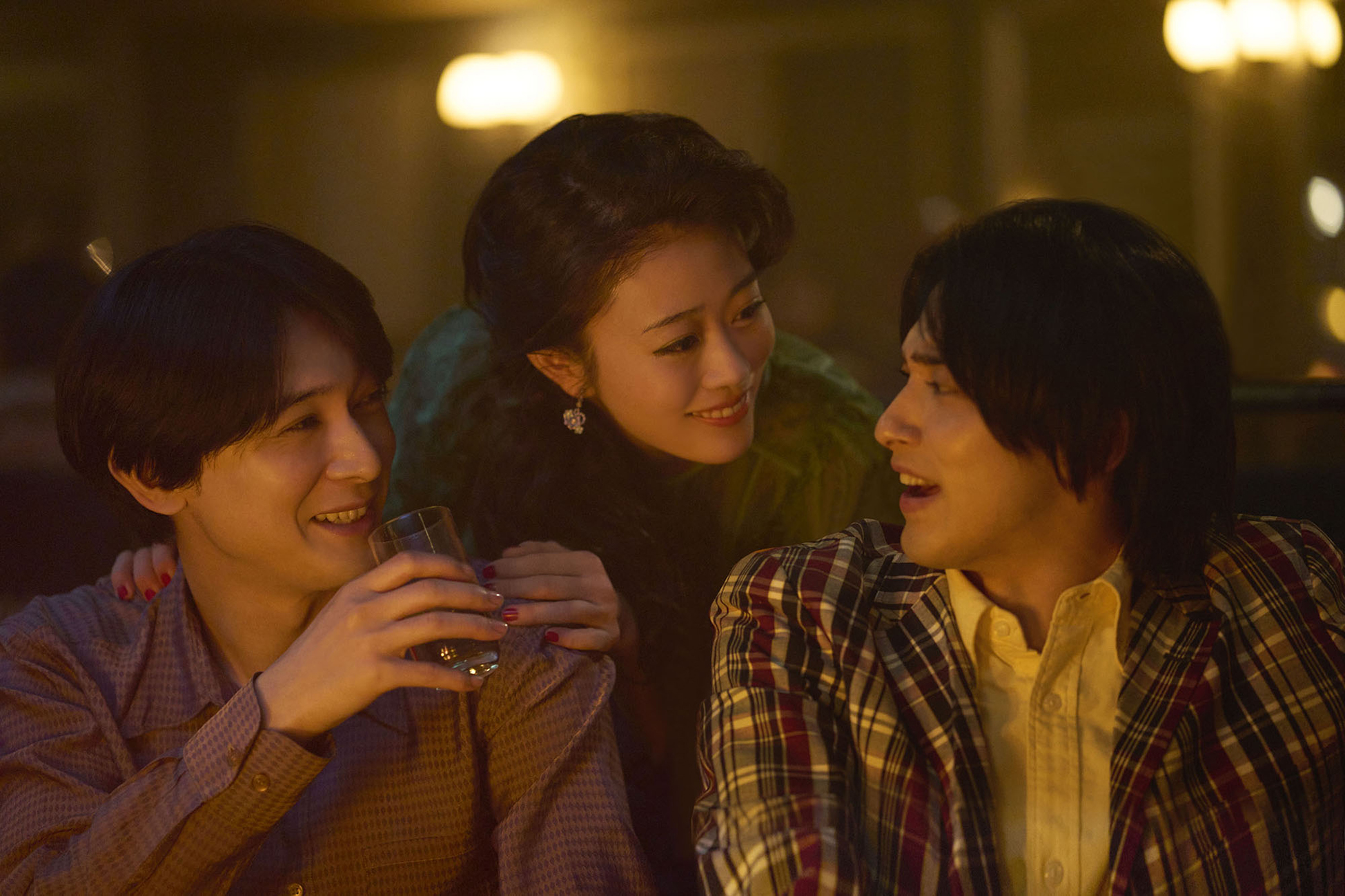
The atmosphere at this year’s opening of the Helsinki Cine Aasia festival felt especially celebratory, as many had been eagerly waiting to see the opening film, Kokuho, directed by Lee Sang-il. The anticipation was not due only to the film’s Academy Award nomination for Best Makeup and Hair, but above all to its massive success in its home country.
Are you familiar with Bayside Shakedown 2? Most international audiences have probably never heard of it. Yet that film held the Japanese box-office record for domestic movies for an impressive 22 years – until Kokuho finally surpassed it. In reality, Japanese box offices are dominated by anime films, but the achievement is still remarkable. Kokuho is not based on a pre-existing media franchise, but on Shuichi Yoshida’s massive novel of over 800 pages. The story follows a kabuki master and his two apprentices, only one of whom is his biological son. Over the years, their rivalry leads to various tensions and dramatic twists.
The story, spanning from 1960 to 2010, does not focus heavily on historical context or politics, but solely on kabuki theater, which remains almost unchanged within the film. It is an intriguing choice, echoed even in the film’s title: kokuhō, or “national treasure.” Foreign countries barely exist within the film’s world: what remains is only kabuki, and beauty.
In recent years, a subtle nationalist undertone has recurred in Japanese blockbuster films. Godzilla Minus One (2023) was not only an awaited sequel to the legendary monster franchise but also a reinterpretation of World War II through the eyes of a traumatized kamikaze pilot. The Demon Slayer manga and anime franchise also draws heavily on Japanese cultural symbols and beliefs, and the characters primarily fight with Japanese swords.
Of course, there are also contrasting approaches: for example, Chie Hayakawa’s Renoir, also shown at Helsinki Cine Aasia, engages with foreignness throughout the entire runtime.
Japanese society is in a state of flux, although one could say the same about most societies anyway. Recent news has focused both on the rise of conservatism and on issues such as over-tourism. The sense of nostalgia present in the aforementioned films may reflect a longing for traditional Japan that no longer exists – if it ever truly did. At the same time, for contemporary Japanese audiences, traditional arts such as kabuki may also be less familiar, making them an attraction in their own right.
Kabuki dates back only to the early 1600s, so it is not an extremely ancient form of theater. It is a commercial and living art form, and modern kabuki has even drawn inspiration from works like Naruto and One Piece. Kokuho strongly relies on tradition, showcasing many iconic plays, which – fortunately – were summarized in Finnish subtitles as brief plot synopses, since I am not an expert on the subject myself. Whether this was a Finnish initiative or part of an international distribution strategy, the subtitles help make the film accessible to a wider audience. I predict a small spike in kabuki theater visits in the near future.
Although Kokuho is still receiving a theatrical release in Finland, the film was the perfect choice to open this year’s festival. Lead actors Ryo Yoshizawa and Ryusei Yokohama trained for six months under the guidance of kabuki master Nakamura Ganjirō. Yoshizawa’s impressive performance as the onnagata may well remain the crowning jewel of his career.
Another interesting detail is that director Lee Sang-il comes from Japan’s Zainichi Korean minority. This is still relatively uncommon in Japanese cinema, yet this national treasure was entrusted to a director of a new generation.
Viktoria Murskaja